
Resources
 This feature requires you to be logged in.
Trusted adult tipsheets
Topic: Student health and wellbeing
On this page
 Document
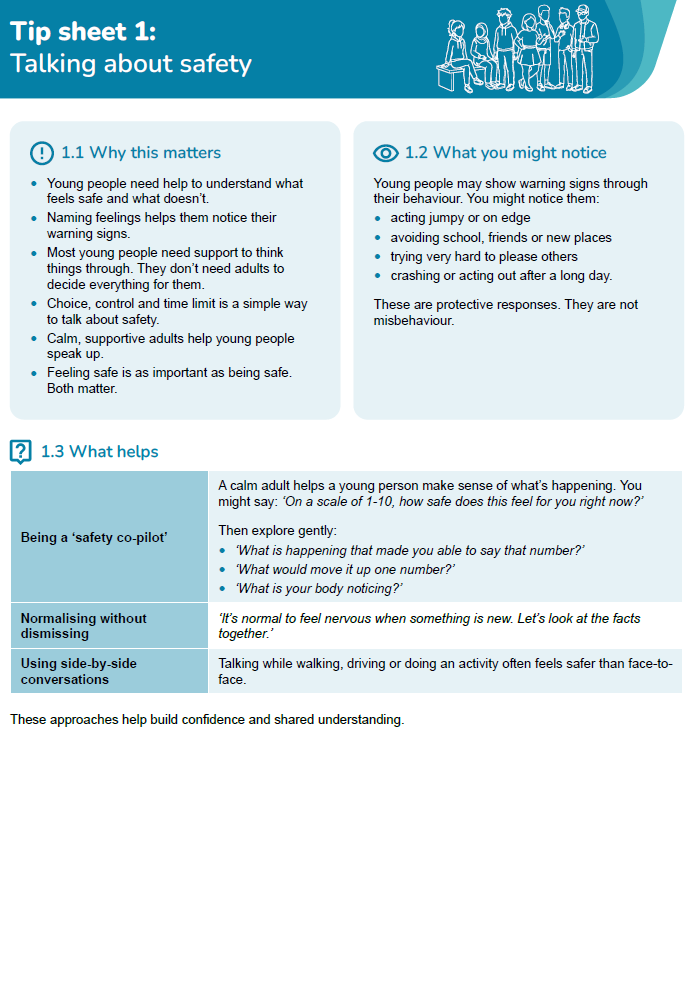
Tip sheet 1: Talking about safety
Share this Trusted Adult Tipsheet with parents and carers when talking about safety with students at school. Young people learn that safety has two parts: • Being safe: what is happening (facts and behaviour) • Feeling safe: how the body and emotions respond. They use the building blocks of safety to judge safety: • Choice: Do I have a say? • Control: Can I make decisions or leave? • Time limit: Do I know when it ends?
 PDF
 Document
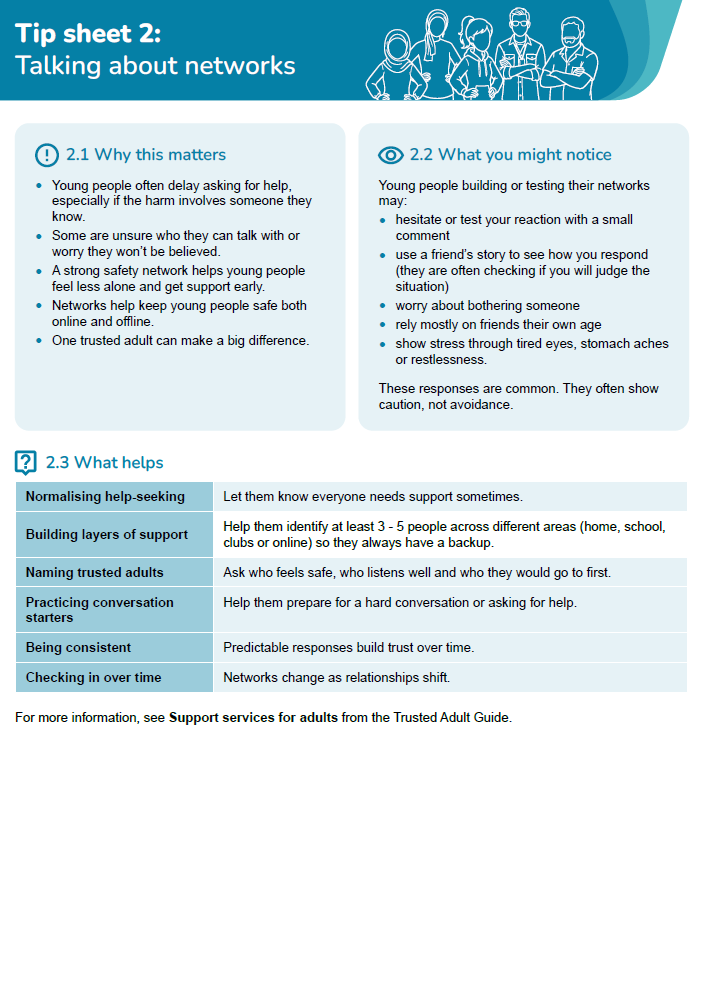
Tip sheet 2: Talking about networks
Share this Trusted Adult Tipsheet with parents and carers when talking about safety networks with students at school. A safety network can include: • trusted adults and friends • school staff and community support • professional services. Young people learn that: • different people play different roles • friends are important, but some problems need an adult • if one adult doesn’t help, they should keep asking until someone does.
 Document
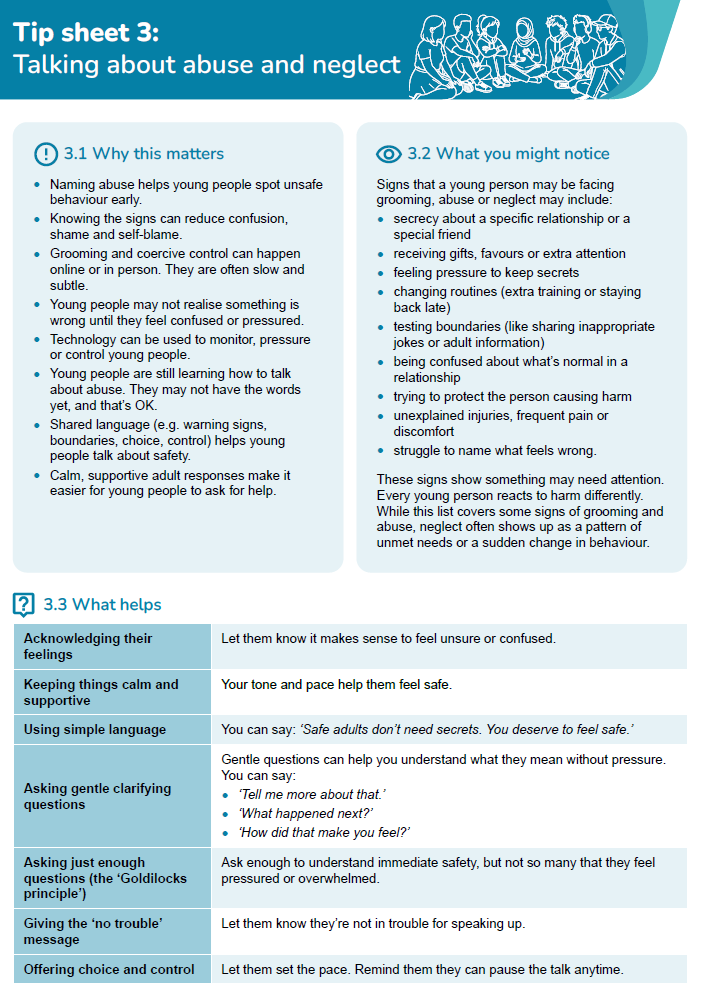
Tip sheet 3: Talking about abuse and neglect
Share this Trusted Adult Tipsheet with parents and carers when talking about abuse and neglect with students at school. Young people learn: • what abuse and neglect are, and the different forms they can take • abuse is never their fault • the person who harms is always responsible for their own behaviour? • grooming and coercive control can be hard to spot • the difference between healthy and harmful behaviour • how to seek help safely • support is available through networks and helplines.
 Document
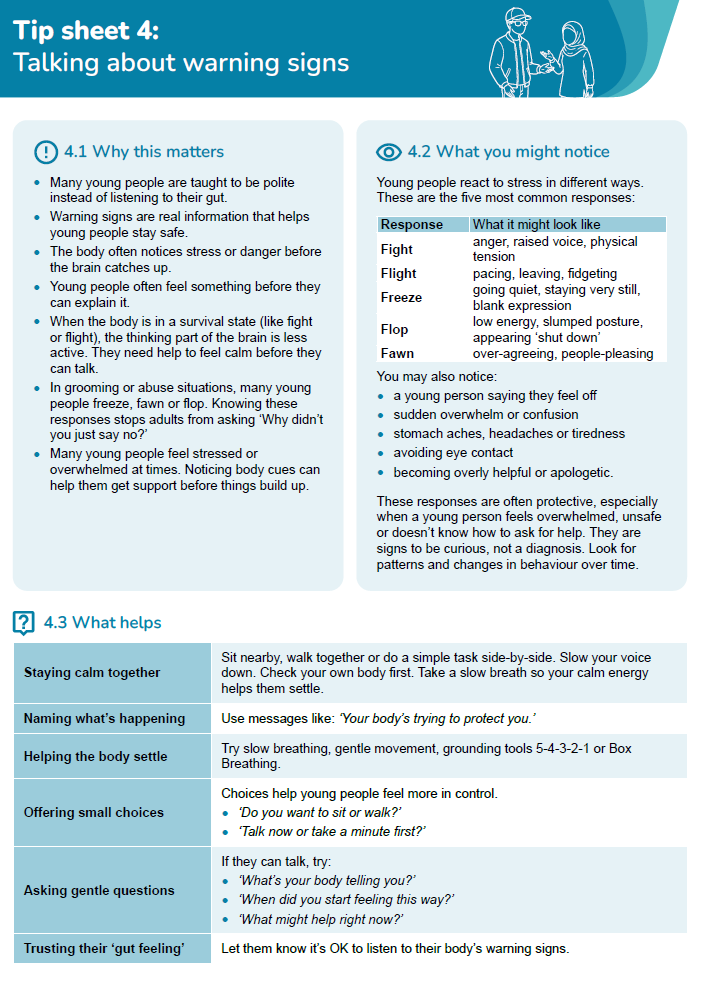
Tip sheet 4: Talking about warning signs
Share this Trusted Adult Tipsheet with parents and carers when talking about warning signs with students at school. Young people learn to listen to their body and trust their warning signs. They explore: • how the body reacts to danger (Fight, Flight, Freeze, Fawn, Flop) • how calming skills can help their ‘thinking brain’ take over • how to notice their own warning signs (e.g. racing heart, tight chest, cold hands) • how to build a personal safety plan.
 Document
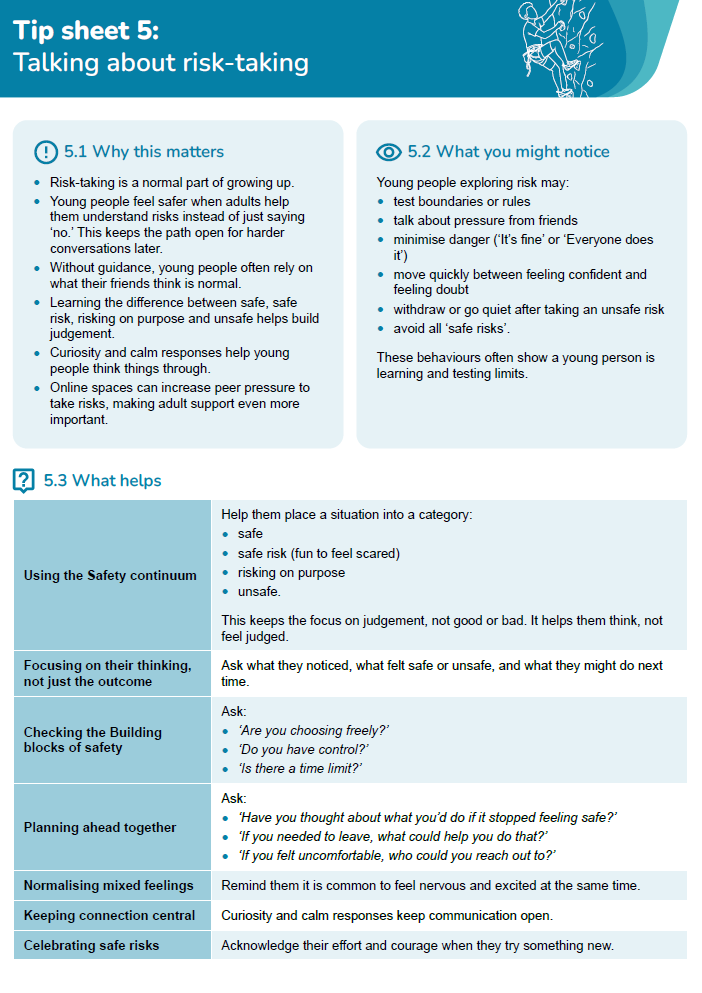
Tip sheet 5: Talking about risk-taking
Share this Trusted Adult Tipsheet with parents and carers when talking about risk-taking with students at school. Young people learn to tell the difference between: • safe activities • safe risk activities (fun to feel scared) • risking on purpose activities • unsafe activities. They learn that: • taking risks is a normal part of growing up • safety can change from moment to moment • choice, control and time limit help them make good decisions • peer pressure can affect safety.
 Document
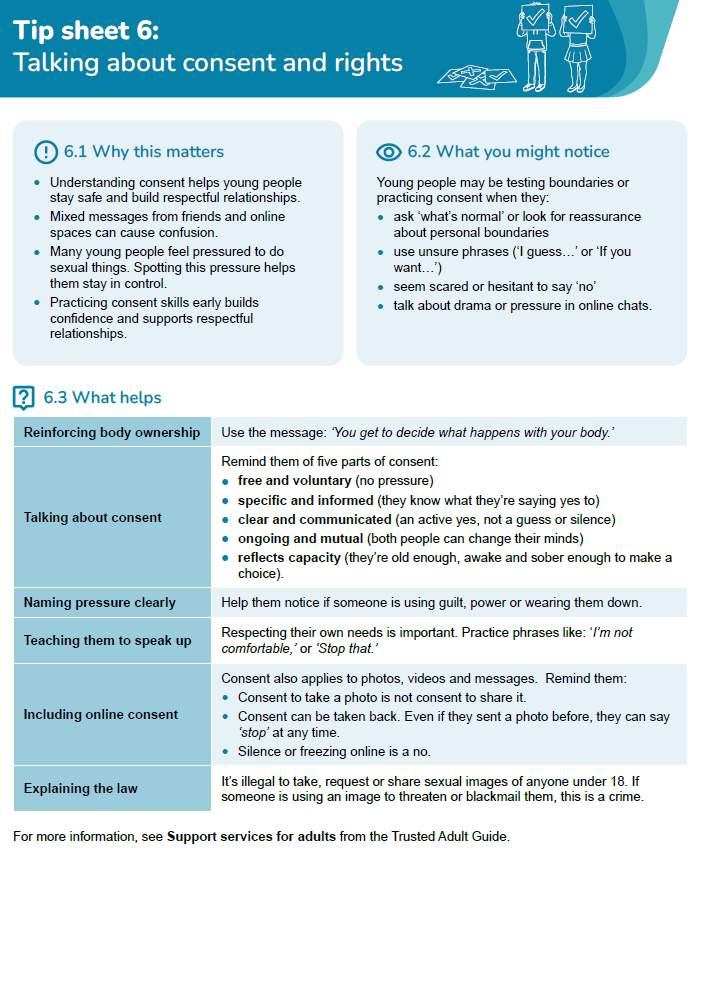
Tip sheet 6: Talking about consent and rights
Share this Trusted Adult Tipsheet with parents and carers when talking about consent and rights with students at school. Consent is part of everyday respect, not just intimate situations. Young people learn: • they own their body and their ‘digital body’ (images, messages and online identity) • consent must be freely given, clear, informed, ongoing, and only possible when both people have the capacity to choose • a ‘no’ always matters • consent applies online and offline • they can change their mind at any time
 Document
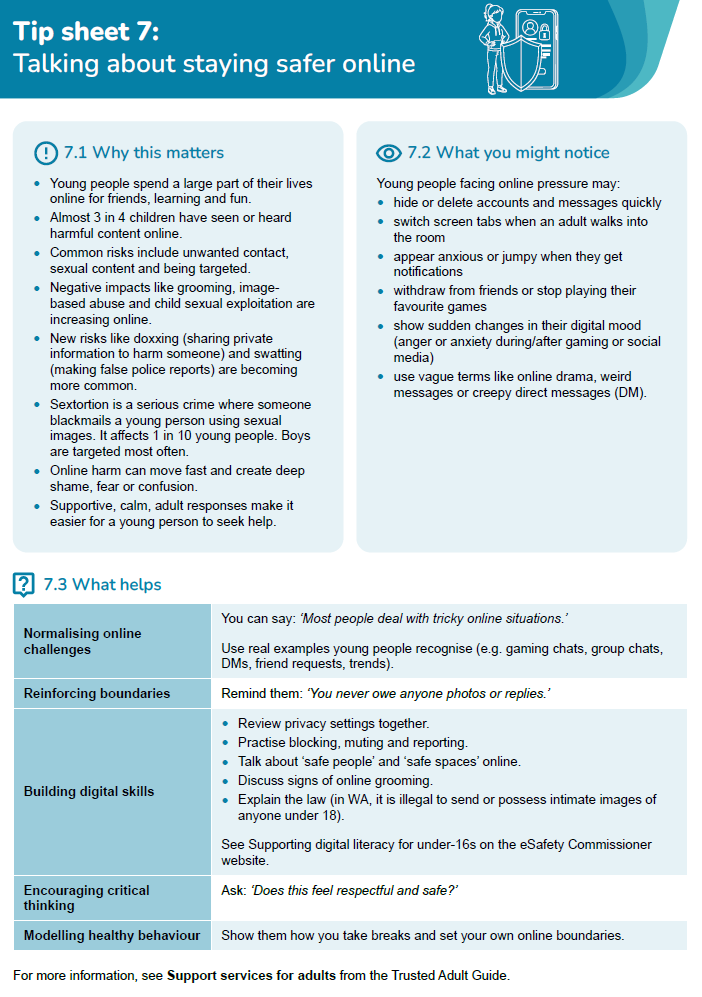
Tip sheet 7: Talking about staying safe online
Share this Trusted Adult Tipsheet with parents and carers when talking about staying safe online with students at school. Young people learn: • online spaces can be positive and risky • they have the right to safety, privacy and respect online • boundaries and consent apply online and offline • pressure and threats are never OK • eSafety Commissioner and ACCCE can help if things go wrong.
 Document
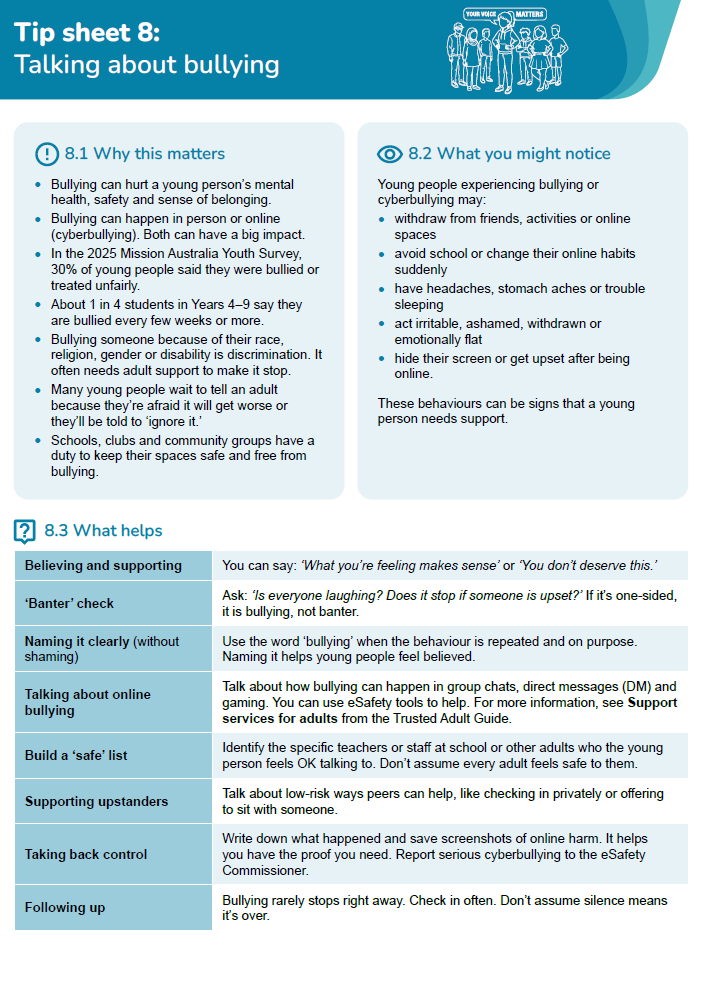
Tip sheet 8: Talking about bullying
Share this Trusted Adult Tipsheet with parents and carers when talking about bullying with students at school. Young people learn that: • bullying is a misuse of power, not banter • they have the right to feel safe and respected • bullying is never their fault • speaking up is a way to stay safe • adult support can stop harm and restore safety • ‘bystanders’ can choose to be ‘upstanders’
 Document
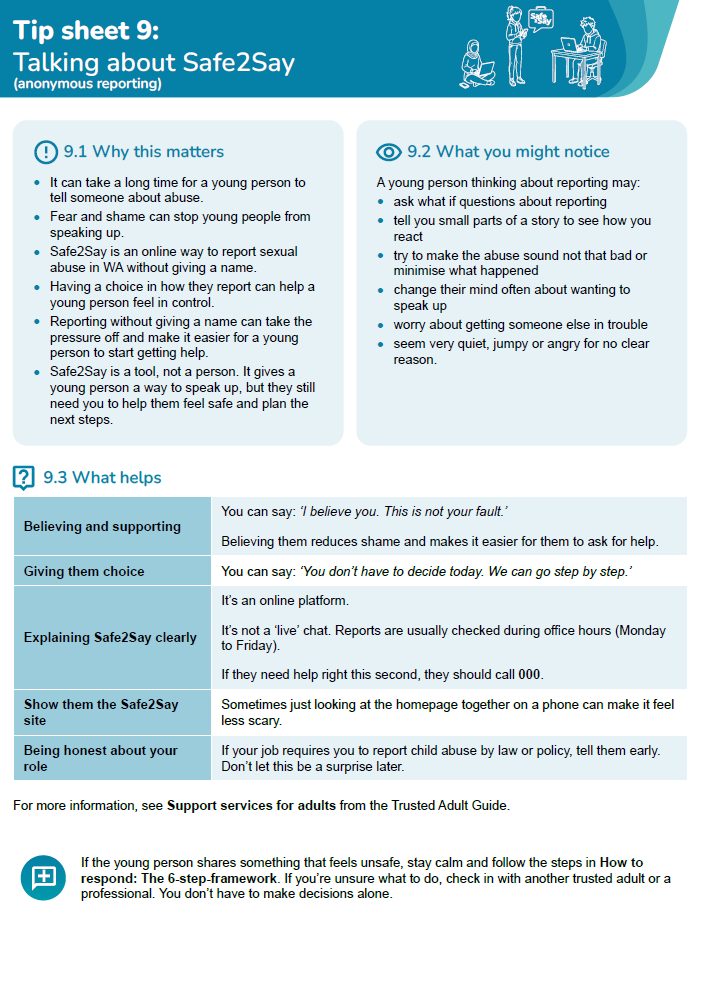
Tip sheet 9: Talking about Safe2Say (anonymous reporting)
Share this Trusted Adult Tipsheet with parents and carers when talking about Safe2Say with students at school. Young people learn that: • there are safe, private ways to report sexual abuse in WA • they can choose if, when and how much they share • Safe2Say offers a way to report without giving a name • trusted adults can help them through next steps without pressure.
 Document
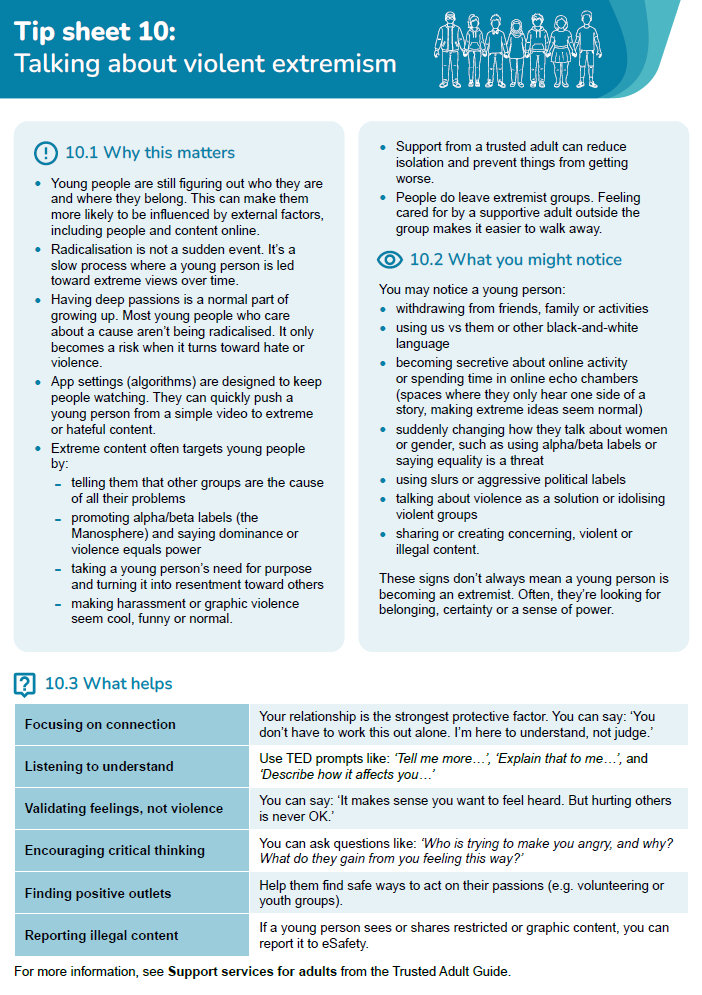
Tip sheet 10: Talking about violent extremism
Share this Trusted Adult Tipsheet with parents and carers when talking about violent extremism with students at school. Young people learn that: • it’s healthy to care about issues but harmful, hateful or violent actions are never OK • beliefs can be expressed safely and respectfully • people can leave extremist groups and change • help is always available.